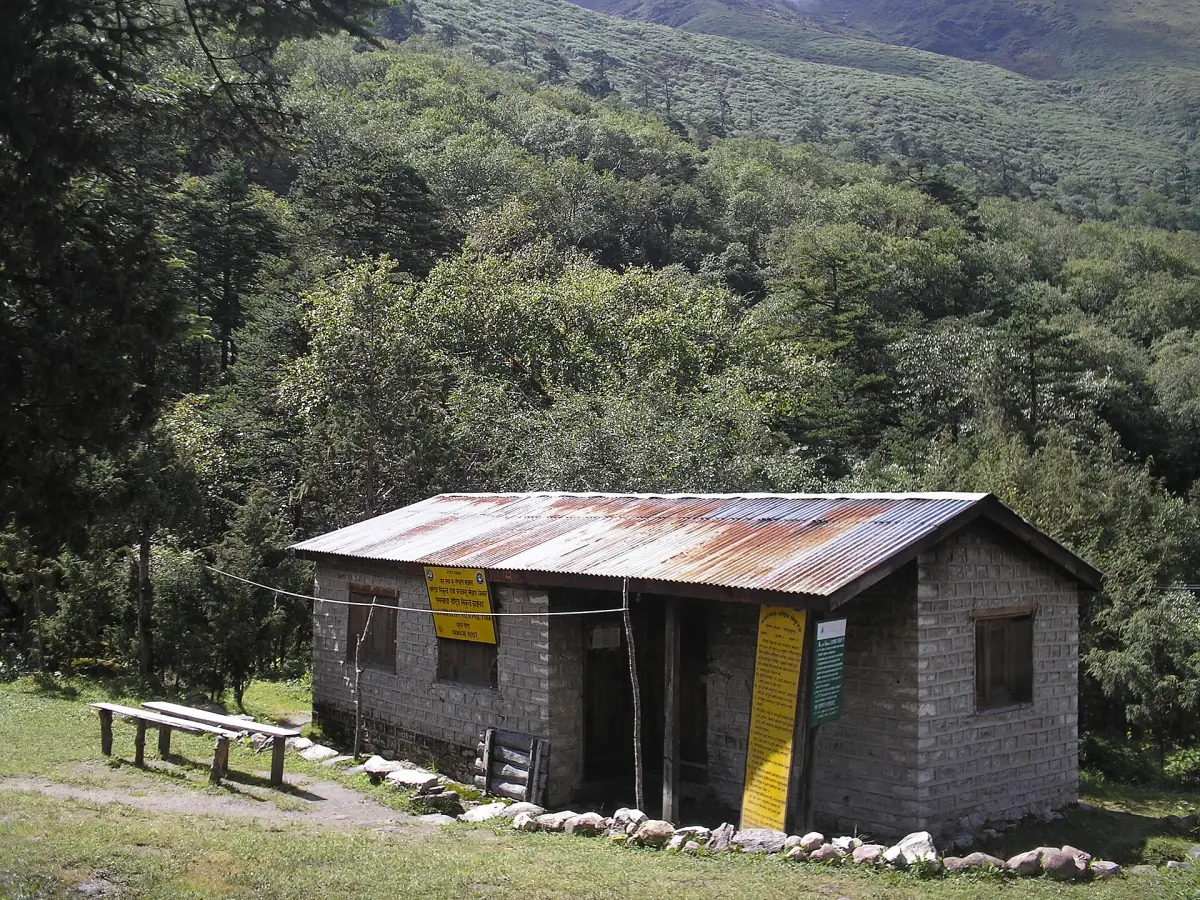
Permits for the Everest Base Camp trek
The classic trek runs through Sagarmatha National Park, which covers 1,148 km² and has been a World Heritage site since 1979. Three things come up: the park entry fee, the trek card of the local Khumbu municipality, and the TIMS card with the guide rule listed by the Nepal Tourism Board. Park and local fees are separate payments, and so are the areas they cover. This is an independent guide and not an official page of the park, the municipality or the tourism board.
Amounts below are per person and in Nepalese rupees (NPR), as listed in 2026. Some pages behind the figures date from 2023 and 2024, so ask for the current amount when you pay.
Fees and permits compared
What each document is, who sets it and what it costs.
| Document | Other foreign nationals | SAARC nationals | Nepalese | Where |
|---|---|---|---|---|
| Sagarmatha National Park entry | NPR 3,000 | NPR 1,500 | NPR 100 | Kathmandu or the park entrance in Monjo, as one source reports |
| Khumbu trek card (municipality) | NPR 3,000 | NPR 2,000 (also China) | – | Tourist Information Centre in Lukla; passport needed |
| TIMS card | NPR 2,000 | NPR 1,000 | – | Issued online by registered agencies, QR card |
Children under 10 enter the park free. No reduction for seniors or students is listed. Children's rules can differ between the park, the municipality and the airlines, so ask before you pay and do not mix them up.
Guided treks that include permits
Everest region treks where an agency handles permits, guide and lodging, with live prices and what each one includes.
The park fee and the VAT question
The tourism board's table gives NPR 3,000 for other foreign nationals, once per entry. One secondary source says 13 % VAT is added, which would make NPR 3,390. The board's table does not say whether tax is included, so the question stays open. Plan for the higher amount and ask at the counter what you owe. The park card is issued at the Tourist Service Centre in Kathmandu or at the park entrance in Monjo, as one source describes it. Counter hours, days off and payment methods can change.
The Khumbu trek card
The municipality sells its own card. Its page lists NPR 3,000 for other countries and NPR 2,000 for SAARC and China, a passport and about 15 minutes of processing at the Tourist Information Centre in Lukla. The page was first posted in April 2023, and the municipality announced a fee change in July 2024, so check the amount that applies now. Some guides still say NPR 2,000 for everyone. Go by the amount you are shown, and keep the receipt. Together, park and municipality come to NPR 6,000, or NPR 6,390 if the VAT figure applies, with TIMS possibly on top.
TIMS and the guide rule
The board states that since 31 March 2023, trekking in listed areas requires a licensed guide and an agency-issued TIMS card. It names the Everest Base Camp route, Gokyo and the Three Passes. TIMS is issued online by registered agencies as a QR card, and the board lists NPR 2,000, or NPR 1,000 for SAARC nationals. It is not described as something an individual traveller issues alone.
In practice the picture is mixed. At the time the rule began, the Khumbu municipality was quoted as allowing solo trekkers and not recognising TIMS, and a travel advice article of 9 October 2026 still describes that exception. Another operator says trekkers without a guide and TIMS are turned back. No single, current checkpoint practice is established. Do not read a lack of checks as permission, and do not assume you will be refused. The safest course is to book through a licensed agency or guide and to ask them what is currently required.
In July 2026 the press reported proposed amendments to a tourism bill, including a guide requirement on named risky or remote routes. They are not confirmed as law.
Rules to keep in mind on the trail
No overnight stay at the southern base camp. The Department of Tourism warned on 29 April 2026 against packages that sell an overnight stay there. Ordinary trekkers are not among the expedition staff who may sleep at the camp. You sleep in Gorak Shep and walk to the camp and back.
Health comes first. A permit or a booked schedule never overrides how you feel. Do not climb higher with headache, nausea or dizziness, and descend with company if you become confused, unsteady or breathless at rest. Speak to a doctor before the trip. See the altitude page.
Insurance. The German Federal Foreign Office recommends cover for mountain risk and helicopter evacuation. Rescue depends on weather and on cost approval, so settle that before you leave.
Rubbish. Expedition rules about waste do not automatically apply to teahouse trekkers, but carrying your own rubbish out is simple good practice.
Related pages
Costs, routes and the north side.
Sagarmatha National Park permits: frequently asked questions
How much is the Sagarmatha National Park fee?
NPR 3,000 per person and entry for other foreign nationals, NPR 1,500 for SAARC nationals and NPR 100 for Nepalese, according to the tourism board. Children under 10 are free. A secondary source adds 13 % VAT.
Do I need a separate Khumbu permit?
The municipality sells a trek card at NPR 3,000 for most nationalities and NPR 2,000 for SAARC and China, as shown on its page from 2023. It is separate from the park fee.
Do I need TIMS and a guide for Everest Base Camp?
The tourism board lists the route under its rule for a licensed guide and an agency-issued TIMS card. How it is enforced in the Khumbu is described differently by different sources. Ask an agency for the current position, and do not rely on being unchecked.
Can I sleep at Everest Base Camp?
No, not as an ordinary trekker. The Department of Tourism warned about overnight packages on 29 April 2026. The usual plan is a night in Gorak Shep.
Is there a permit for the Tibet side too?
Yes, but it is a different system. Foreign visitors to the north side need a Tibet permit arranged through an agency in China and an organised tour. See the Tibet page.